




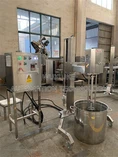
Automatic Labeling Machine
Automatic labeling machine is a machine that dispenses or applies labels on different containers, items, packages, or products. Through coordination of the different components, automatic labeling machine can print these labels onto the desired product. Automatic labeling machines come in different sizes designs and shapes depending capacity of production and the type of product you want to apply the label on. Some of these machines can perform multiple tasks making it easy to label a wide variety of materials such as steel, glass aluminum, and plastics.


Advantages of Automatic Labeling Machine
Increased Production Efficiency
Automatic label applicator machines can dramatically boost your production speeds, enabling you to meet higher demands without compromising quality. This increase in efficiency can help your business scale operations and improve overall productivity.
Enhanced Accuracy and Consistency
Our machines are equipped with advanced mechanisms that ensure precise label placement every time. This level of accuracy is difficult to achieve manually and can significantly enhance your product presentation.
Reduced Downtime and Errors
Automation reduces the likelihood of errors and downtime associated with manual labeling. This reliability ensures a smoother production flow and fewer disruptions, ultimately leading to higher output and profitability.
Versatility and Flexibility
Our label applicator machines can handle a wide range of label types and sizes, from small vials and bottles to large containers and packaging. This versatility makes them suitable for various applications and industries.
Professional team
JKE is a 100% customer driven company. We offer customization to any equipment we sell if it is safe and demanded by customer. Our engineer team are always ready to help customers design new equipments for their innovative research and industry production.
Production market
Our JKE Equipment is exported to South Africa, Czech Republic, United States, Argentina, Belgium, Egypt, Malaysia, Indonesia, Saudi Arabia, Britain, Australia, Philippines and other countries.
After-sales service
Except in-depth knowledge, rich experience and customer-oriented design in industrial automation and machinery, we offer you good after-sale services. JKE have the most professional after-sales team to serve the domestic and overseas markets.
Certificate
① A High Efficiency Emulsifying Homogeneous Production Equipment
Patent No: 2018216906490
② A Synthetic Equipment for Urea-based Lubricating Grease
Patent No: 2018216906518
③ An Industrial Production System of Salad Sauce
Patent No: 2018216911094
④ An On-line AES High-efficiency Dissolution Homogenization System
Patent No: 2018216911215
Core Components of an Automatic Labeling Machine
Control System
The control system guides your automatic labeling machine. Modern versions often use PLC controls. These controls make it easy to manage all machine functions. Plus, many PLC systems have Ethernet capability for remote access and control. Truly, an efficient control system makes your machine work seamlessly.
Label Dispenser
The label dispenser feeds labels into the applicator. The most efficient machines can handle 300 labels per minute. Dispensers are typically made of stainless steel for durability. The use of stepper motors ensures precise label delivery every time.
Product Detector
A product detector identifies products on the conveyor. Once detected, it signals the applicator to release a label. Photoelectric sensors are common for this task. These sensors can even spot fast-moving items, improving machine efficiency.
Label Applicator
The label applicator sticks labels on your products. Pneumatic applicators are a common type. They can apply up to 120 labels per minute, which speeds up production. However, more advanced models can reach speeds of up to 600 labels per minute.
Conveyor System
The conveyor system transports your products through the machine. Conveyors can handle varying speeds, usually between 12 to 60 meters per minute. These speeds depend on product size and the required labeling precision.
Power Supply
Your automatic labeling machine needs a power supply. Standard models require 220V AC. But, heavy-duty models may need up to 440V. Thus, the power supply is essential for smooth operation.
Label Roll Holder
The label roll holder keeps your labels ready for dispensing. Some holders can accommodate rolls with a diameter of up to 350mm. This feature allows for longer operation times without needing frequent roll changes.
Machine Body
The machine body houses all components. Stainless steel is often the preferred material for durability. Plus, it allows for easy cleaning and maintenance.
Touch Screen Interface
Most modern labeling machines have a touch screen interface. This feature allows users to adjust machine settings easily. Such a screen can display important data such as label count and machine speed.
Product Alignment Device
The product alignment device ensures that your products are correctly positioned for labeling. Adjustable guides are often used for this purpose. So, no matter the product size, you can achieve accurate labeling.
Label Sensor
The label sensor ensures proper label placement. These sensors can detect gaps between labels, allowing for accurate label application. Advanced sensors can even cope with transparent labels, thus adding to your machine's versatility.
Different Types of Automatic Labeling Machines
Round Bottle Labeling Machine
- A marvel of automation, the round bottle labeling machine labels up to 150 bottles in a minute. Working non-stop, the machine' s high precision servo motor ensures accuracy. Bottle diameters between 25 and 120 millimeters find a perfect fit.
- A manual approach might handle just 20 bottles per minute. Thus, automatic labeling proves to be seven times more efficient.
Flat Bottle Labeling Machine
- Flat bottle labeling machines impress with high speed and precision. They manage an astounding 250 bottles per minute. Variations in bottle widths from 15 to 150 millimeters pose no issue. Expertly placed labels enhance the product' s visual appeal.
- Consider the speed of manual labeling, perhaps 30 bottles per minute. The flat bottle labeling machine offers over eight times the productivity.
Manual Bottle Labeling Machines
- Manual labeling machines are a simpler choice for small businesses. Speeds are more modest, at around 40 labels per minute. The precision of manual label placement may vary. Yet, these machines cater to a wide range of bottle sizes, between 12 to 150 millimeters in diameter.
- High levels of operator control allow for custom label positioning. All in all, manual labeling machines offer affordability and flexibility.
Tabletop Bottle Labeling Machines
- Compact but capable, tabletop labeling machines fit most production lines. With outputs of 60 labels per minute, they match medium-sized operations.
- Flexibility to accommodate bottles of 12 to 250 millimeters in diameter sets them apart. The precision of labels applied ensures consistent product presentation. Tabletop machines strike a balance between speed, accuracy, and space efficiency.
Double Side Sticker Labeling Machines
- Offering dual functionality, double-side sticker machines label both sides of a product. Capable of managing 120 products per minute, efficiency is high.
- Containers between 20 and 200 millimeters in width are compatible. Consistent label placement enhances brand visibility. In contrast to single-sided machines, double side sticker machines double the output without doubling the space.
Automatic Sticker Labeling Machines
With rapid outputs of up to 200 labels per minute, automatic sticker labeling machines stand out for speed. Compatible with labels ranging from 12 to 150 millimeters in width, they offer versatility. Precision in label placement elevates the product' s aesthetic. The speed and accuracy of these machines far surpass manual labeling methods.
Box Labeling Machines
- Box labeling machines; boast outputs of 150 boxes per minute, increase production speed. Accommodating boxes up to 300 millimeters in width, they offer adaptability.
- Accurate label placement ensures a neat, professional look. Compared to manual methods, box labeling machines significantly improve productivity.
Jar Labeling Machines
Designed for precision, jar labeling machines handle 200 jars per minute. Label sizes between 15 to 150 millimeters to find a match. Neat, exact labels enhance the product' s appeal. In comparison to manual efforts, jar labeling machines multiply efficiency eightfold.
Bag Labeling Machines
Specialized for bags, these machines label 180 bags per minute. Bags of 30 to 200 millimeters in width pose no challenge. Uniform label application boosts the product' s visual appeal. Bag labeling machines offer six times the output of manual labeling, contributing to faster production.
Prepare and thread the label stock
No matter the level of automation your equipment has, this step is inevitable. Place a label stock on the label roll holder. This component comes with a spindle that is used to place and hold the label stock as fed into the machine. Pull the tail of the label roll and thread it through rollers, the code printer, the photoelectric sensor, and the take-up reel.
Load products to be labeled
Suppose you're using a round bottle labeling machine. Load bottles onto an infeed turntable, which is connected to a conveyor. The loading action can be either performed by hand or an upstream conveyor. This depends on your machine configuration.
Feed products
The bottles are transferred to the labeling area by the conveyor. There's a spacer wheel sitting on the side of the conveyor. This component stops the passing bottles for seconds and releases them. This ensures bottles are even spaced as they pass through the labeling station on the conveyor.
Apply labels
When the even-spaced bottles reach the labeling area, a belt applicator dispenses labels to each bottle as they pass. The synchronous movement of the belt applicator and the conveyor enables the bottle to rotate. This allows the label to be applied to the bottle.
Discharge the labeled bottles
Once applied with labels, the bottles are transferred to an accumulation table. If the automatic labeling machine is integrated into a production line, the bottles will move to the next processing area.
Applications of Automatic Labeling Machines
Food and Beverage Industry
In the food and beverage industry, automatic labeling machines play a vital role in labeling products with essential information, such as ingredients, nutritional facts, and expiry dates. These machines ensure compliance with labeling regulations and provide consumers with accurate information to make informed choices.
Pharmaceutical Industry
Pharmaceutical products require precise labeling to ensure patient safety and regulatory compliance. Automatic labeling machines are capable of accurately labeling pharmaceutical containers, such as vials, bottles, and blister packs, with critical information like dosage instructions, warnings, and batch numbers.
Cosmetics Industry
Cosmetic products often require attractive and visually appealing labels to catch the attention of consumers. Automatic labeling machines enable precise application of labels on cosmetic containers, enhancing product presentation and brand recognition. They ensure consistent labeling across a wide range of cosmetic items, including bottles, tubes, and jars.
Logistics and Distribution
Automatic labeling machines are extensively used in logistics and distribution centers to label packages and cartons. These machines streamline the labeling process, improving inventory management, and facilitating accurate tracking and tracing of products throughout the supply chain.
Unpacking
Take time with the unpacking process. Manual says, “Handle with car” For machines that are 30kg or more, get another person' s help. This prevents any harm to you or damage to the machine.
Placement
A solid, level surface ensures the machine runs smoothly. Avoid places with direct sunlight, extreme heat, or high humidity. These conditions can cause damage.
Power Connection
Check the machine' s voltage, usually 110V or 220V. It' s crucial to use the correct power supply. An incorrect connection might lead to major machine failure.
Loading Labels
Correct label loading is key for machine efficiency. Follow the arrow direction in the manual. The label roll should be less than 300mm in diameter and width between 20-110mm.
Setting Parameters
Fine-tune machine parameters. Adjust speed, label length, and position. Speeds range between 20-200pcs/min. Label lengths could be between 10-300mm.
Trial Run
Perform a trial run. Let the machine run empty for about 15 minutes. Listen for any unusual sounds. It ensures the machine works smoothly before labeling.
Training
Train all operators properly. Informed users can handle the machine better. They can spot issues early, boosting the machine' s lifespan.
Documentation
Keep all machine documents safe. Manuals, guides, warranty papers are crucial. If issues arise, these documents guide your next steps.
Compliance Checks
Ensure the machine meets all regulatory standards. Machines must comply with CE or FCC certifications. Safety standards reduce accidents and ensure secure operations.
Software Installation
Some machines need special software. Download from manufacturer' s website. Update software regularly for smooth operations and added features.
Network Connection
Connect the machine to the network if needed. A stable internet connection helps with remote access and updates. Ensure firewalls and security measures are in place.
Waste Management
Handle label waste responsibly. Don' t let waste build up near the machine. Dispose of label waste according to local regulations.
Essential Maintenance for Automatic Labeling Machine


Adjustment of Label Box
The centerline of the label box, the center axis of the labeling station, and the label paper should be tangential. The center axis of the label plate should form a straight line, adjusted to be tangent to the label paper (0 distance), then move the label box closer by 1mm to 2mm. The gap between the label paper and the pressure bars on both sides of the label box should be between 0.8mm and 1mm. If the gap is too large, it may cause the label paper to shift in the label box, resulting in slanted labeling. If the gap is too small, it may cause difficulty in label application.
Adjustment of Brushing Device
The center of the brush should align with the label and be symmetrical on both sides, perpendicular to the surface of the container. The overlapping gap for brushing across the container should be 10mm to 15mm for a single brush and 5mm to 10mm for a combination brush. The distance between the cleaning brush and the sponge should be 1mm to 2mm. The pressure head should be 20mm lower when there are no bottles compared to when there are bottles.
Adjustment of Label Station
Adjustment of the scraper plate and the rubber roller: There should be no gap between the scraper plate and the rubber roller along the entire length. If there is a gap, it can be adjusted by adjusting the eccentric bolts. Adjustment of the rubber roller and the label plate: There should only be contact between the label plate and the rubber roller without any pressure. An optimal gap between the label plate and the rubber roller is 0.1mm to 0.2mm, which can be achieved by adjusting the bearing seat of the lower part of the rubber roller and, if necessary, adjusting the bearing of the upper part of the rubber roller.
Adjustment of Bottle Infeed Star Wheel, Bottle Outfeed Star Wheel, and Bottle Infeed Screw
When adjusting the bottle infeed, bottle outfeed star wheels, and bottle infeed screw, the pressure head of the labeling machine should be used as a reference. Adjustment of bottle infeed star wheel: When the pressure head just presses down the bottle, adjust the bottle infeed star wheel so that the bottle is positioned in the middle of the star wheel groove. Adjustment of bottle infeed screw: Use the bottle infeed star wheel as a reference. When the bottle is positioned in the middle of the bottle infeed star wheel groove, adjust the screw so that it is close to the bottle but does not cause displacement. Adjustment of bottle outfeed star wheel: When the pressure head just lifts up, adjust the star wheel so that the bottle is positioned in the middle of the star wheel groove.
Other Considerations
- When the labeling machine is temporarily idle, unplug the power and cover it with a dust cover to prevent dust from settling on it. Additionally, the hot stamping belt of the labeling machine also needs to be cleaned regularly to ensure better operation.
- After using the labeling machine for a period of time, apply lubricating oil. Many components of the labeling machine, such as gears, bearings, and gearboxes, are prone to rust and wear after use. Applying lubricating oil makes the movement between components smoother.
- The working environment of the labeling machine should be well-ventilated and dry, with an ideal operating temperature of 25 degrees Celsius.
- To maintain continuous operation of the labeling machine, check the operation of its cooling fan regularly to ensure that the temperature does not rise too high and avoid burning the electrical system.
- Regular cleaning and maintenance of the labeling machine are necessary during daily use, as the equipment is prone to dust accumulation, requiring cleaning at regular intervals.
- To ensure the smooth operation and normal use of the labeling machine, regular cleaning of high-temperature components, especially the coding machine part, is necessary.
FAQ
We're professional automatic labeling machine manufacturers and suppliers in China, specialized in providing high quality OEM service. We warmly welcome you to buy custom made automatic labeling machine at competitive price from our factory.
Machine For Making Mayonnaise, Mayonnaise Industrial Mixer, Mayonnaise Making Machine with Tank